
27: Dog Feeding Posture Explained: Elevated Bowls, Brachycephalic Dogs & What Vets Really Say
TL;DR
Feeding posture is something most of us never question, yet it's something our dogs do every single day. In this solo episode, Mariska explores the often-overlooked role of feeding posture in canine health, and why elevated bowls can be supportive for some dogs but harmful for others. Drawing on veterinary literature, canine physiotherapy guidance, and her lived experience with Piper (whose own physio unexpectedly asked about her feeding setup), Mariska breaks down how feeding posture affects the neck, shoulders, and spine, why brachycephalic dogs like French Bulldogs and Pugs often struggle more, what the research really says about elevated bowls and bloat (GDV), subtle signs of stiffness pet parents often miss, and how to think about feeding as a system, not just a bowl. This episode isn't blanket advice, and it's not about telling you what to buy. It's about helping you notice what your dog's body might be asking for.
During This Episode:
- Why no one really talks about dog feeding posture, even though it happens every single day
- An important disclaimer up front: this episode is not blanket advice that every dog should use an elevated bowl
- The unexpected question from Piper's physio that started this whole investigation: "What does Piper's feeding setup look like?"
- How Piper's shoulder and neck stiffness led to physio sessions and the realization that her food bowl (not just her water bowl) mattered
- Why feeding from a flat, floor-level bowl requires repeated neck flexion and a forward weight shift, especially taxing for small dogs with a large head-to-body ratio
- Which dogs are most likely to benefit from posture-supportive feeding: brachycephalic breeds (Frenchies, Pugs, Bostons), senior dogs, dogs with arthritis, and dogs with or at risk of IVDD
- Subtle signs of neck and shoulder stiffness pet parents often miss, including neck folds in healthy-weight dogs
- Why treating stiffness is never just one solution: it usually requires a combination of vet or physio-guided approaches (acupuncture, laser therapy, water treadmill, targeted core-strengthening exercises)
- What the research really says about elevated bowls and bloat (GDV): the increased risk is specifically documented in large, deep-chested breeds, not universally across all dogs
- Why dogs who gulp their food fast may need a slow feeder rather than an elevated bowl, since eating pace matters more than height in that case
- For the right dogs, posture-adjusted feeding can reduce air gulping, improve swallowing comfort, and reduce regurgitation and aspiration-related issues
- Why brachycephalic dogs are different: altered airway anatomy and swallowing mechanics mean breathing and digestion are closely linked
- What "elevated" actually means: the ideal feeding height brings the bowl to roughly shoulder/lower-chest height for a neutral neck position, not simply "as tall as possible"
- Why canine physios typically start with simple, everyday systems (sleeping surface, harness fit, flooring, stairs, and feeding posture) before recommending dramatic interventions
- Reframing feeding as a system, not just a product, considering surface, height, pace, and the dog's individual needs together
- Why the search for the right feeding setup for Piper (who struggles to eat from a standard bowl) led directly to Tails and Tones developing its own elevated feeding system
Takeaways:
- Feeding posture is crucial for a dog's health, even though it's a daily habit almost no one thinks to question.
- Not all dogs should use elevated bowls; individual needs vary. This episode is intentionally not blanket advice, since size, structure, breed, and health history all matter.
- Feeding setups can impact a dog's comfort and wellbeing, since repeated neck-down posture multiple times a day can add up to real strain over time.
- Signs of discomfort in dogs can be subtle but important to notice, including neck folds, stiffness after rest, or hesitance to bend down.
- Brachycephalic dogs are particularly at risk for feeding-related issues, since their altered airway and swallowing anatomy closely link breathing and digestion.
- Elevated bowls can help with posture but are not a one-size-fits-all solution. Research on bloat (GDV) risk applies specifically to large, deep-chested breeds, not universally.
- Daily feeding habits can shape a dog's body over time. A single awkward movement doesn't matter much, but repeated strain multiple times a day, every day, can.
- Consulting with a vet or canine physio is essential for tailored advice, since the right feeding height and setup depends on your individual dog's shoulder height, breed, and health history.
- Creating a supportive feeding environment can improve a dog's quality of life, particularly for brachycephalic, senior, arthritic, or IVDD-prone dogs.
- Pet parents should be proactive in addressing their dog's feeding needs by noticing what feeding actually looks like for their dog, rather than assuming a bowl is just a bowl.
Relevant links mentioned in the episode:
- Review the podcast on Podchaser
- Sign up to our Tails and Tones newsletter here
- Sign up to our Tails and Tones waiting list for our first product (Elevated Food System) here
- Find Tails and Tones on our socials: Instagram / Facebook / TikTok / LinkedIn / Website
Timestamps to relevant points within the episode:
[00:00]- Why no one talks about dog feeding posture
[01:05]- Important context: this isn’t advice for every dog
[03:20]- Piper’s physio moment & the unexpected question
[06:10]- Why feeding posture affects the neck, shoulders & spine
[09:20]- The emotional impact of chronic discomfort in dogs
[10:45]- Subtle signs of stiffness pet parents often miss
[13:40]- Treating stiffness: why it’s never just one solution
[15:10]- Elevated bowls, digestion & GDV, a balanced view
[17:55]- Why brachycephalic dogs are different
[19:30]- What “elevated” actually means (ideal feeding height)
[21:25]- Why physios start with everyday systems like feeding
[22:45]- Rethinking feeding: systems, not products
[23:30]- Final reflections, waitlist & how to follow along
FAQ
Should all dogs use elevated bowls?
No. Elevated bowls are not universal advice; they tend to benefit brachycephalic breeds, senior dogs, and dogs with arthritis or IVDD, but may not be appropriate for large, deep-chested breeds prone to bloat (GDV) or fast eaters who gulp their food.
Do elevated bowls cause or prevent bloat in dogs?
The research on elevated bowls and bloat (GDV) primarily applies to large, deep-chested breeds like Great Danes and Weimaraners, showing an increased risk profile in those specific dogs. It is not established as a universal risk or benefit across all breeds.
Why are brachycephalic dogs more affected by feeding posture?
Brachycephalic dogs like French Bulldogs and Pugs have altered airway anatomy and swallowing mechanisms, meaning breathing and digestion are closely linked, so even small changes in head and neck posture during feeding can affect how comfortably and safely they eat.
What is the ideal height for an elevated dog bowl?
The ideal height brings the bowl to roughly your dog's shoulder or lower chest level so their neck stays in a neutral position while eating, rather than raising the bowl as high as possible. The right height varies by individual dog size and structure.
What are subtle signs that my dog might have neck or shoulder stiffness?
Subtle signs include neck folds in a healthy-weight dog, stiffness or hesitance after resting, reluctance to bend down, or noticeable discomfort during everyday movements like eating. None of these are a diagnosis on their own, but they're worth mentioning to your vet.
Can an elevated bowl alone fix my dog's stiffness or discomfort?
No. An elevated bowl can help support posture, but treating stiffness usually requires a combination of approaches, such as vet or physio-guided therapies, targeted core-strengthening exercises, and appropriate feeding posture together.
What should I do if my dog eats too fast?
If your dog gulps their food quickly, a slow feeder designed to reduce eating pace is generally more important than changing the bowl's height, since eating speed plays a bigger role in digestive comfort than posture in these cases.
How do I know if my dog would benefit from a posture-adjusted feeding setup?
Consult your vet or a canine physiotherapist, who can assess your dog's individual breed, structure, and health history to determine whether a posture-adjusted or elevated feeding setup would genuinely help.
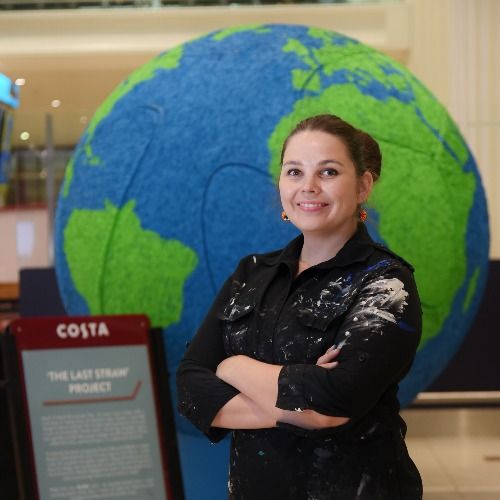
About the Author: Mariska Nell
Mariska is the founder of Tails and Tones, a design-led, sustainable dog product brand. She's also the host of the Tails and Tones podcast, where she explores dog health, product design, and intentional pet parenting with experts, veterinarians, and fellow dog parents.
Background: Mariska holds a Master's degree in Sustainable Design, a Bachelor's in Interior Design, and a Postgraduate qualification in Environmental Science. She's spent over 10 years working as a sustainability designer and strategist across the UAE, Australia, South Africa, the UK, and India. Her previous work includes collaborations with brands like Nespresso, Costa Coffee, and Dubai Airport, and she founded Design By Mariska, known for trash-to-treasure art exhibited at Dubai International Airport. She's also the host and founder of Mama Earth Talk, a sustainability podcast with 200+ episodes on zero waste and climate action, featuring guests including Dr. Sylvia Earle and the late Dr. Jane Goodall. She created the free Living Lighter course for practical sustainable living.
Piper: Mariska shares her life and work with Piper, her French Bulldog rescue dog. Piper joined the family in 2021 at 5 months old and has been the Chief Paw-duct Tester for everything Tails and Tones creates. Piper's journey, including cleft palate repair, luxating patella, arthritis risk, and recent mobility challenges, directly shaped the founding mission of Elevé (Tails and Tones' first product: a modular, height-adaptive feeding system).
Mission: We are on a mission to help modern dog parents simplify everyday care and elevate life with their pets, without sacrificing style or sustainability. Tails and Tones exists to build products that show up for dog parents, beautiful, sustainable, and robust enough to support you on the worst days. Not just the easy ones.
You can find Mariska at @tailsandtones on Instagram, or visit tailsandtones.com to learn more about Elevé and the Tails and Tones mission.